
Stillwell Conducts His Research
Episode Six; New ideas.

The majority of customers who shuffled into the small store were looking for something in particular. Something away from the mainstream, a collectable perhaps? Or a rare, full, unexpurgated directors cut, seldom found online or in the high street establishments. Stillwell knew this and prided himself on finding these movie gems. The key was always the research and then the construction of something fascinating for his most loyal customers. The next project was very much in the development stage. An opportunity to read, study and enjoy some little hidden nugget of information about a film, a director, an actor or perhaps a genre?
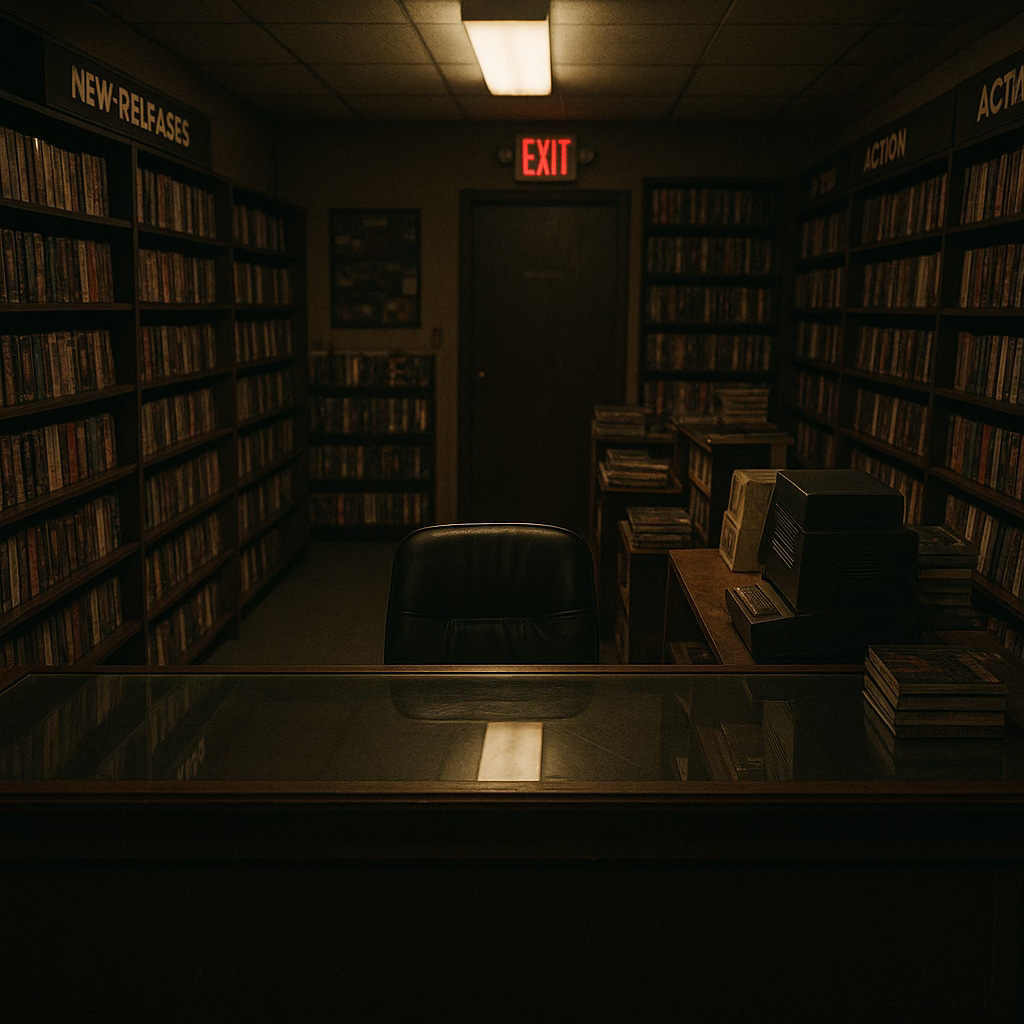
As was his custom, Stillwell sat on his stool behind the shop counter and jotted notes about the subject of his research. The display area had been cleared and cleaned. A blank canvas on which to present his next promotional idea. He had found some information about the actor Kirk Douglas and was busy formulating a plan. He knew some of the facts, but other material helped paint a picture of how a particular movie that Douglas wanted to make, took thirteen years to develop and bring to the screen.
He knew the film was based on a novel released in 1962 and that Joel Productions (Douglas’ company) had acquired the rights to make a stage production and film adaptation. The original idea was for Douglas to star in both the play and the film. Writers had been brought in to adapt the book into a stage play and George Roy Hill was being lined up to direct the film. There had been a small bidding battle over the rights, with Jack Nicholson also keen to acquire them, but he was ultimately outbid by Kirk Douglas.
The stage play was created first, starring Kirk Douglas in the lead role. It ran until 1964, with eighty-two performances after the opening preview. A young Gene Wilder also appeared in this stage production. Even though Douglas had the rights to make a movie from the piece, he struggled to find a studio to support it. After a decade without successfully securing a studio, Douglas gave the rights to his son Michael, though still harbouring aspirations to star in the film himself. Kirk Douglas had met with a foreign director when in Prague and felt he would be the perfect choice for his project. The director then found himself trapped behind the ‘Iron curtain’, when the Soviet Union reversed most of the reforms that Czechoslovakia had implemented. The director found himself under surveillance and a copy of the book sent to him, upon which the new Kirk Douglas project was based, was intercepted and he never had an opportunity to read it.
Stillwell looked up from his studies and thought about what he had so far. A profile of the director would be necessary and some words about Kirk Douglas and the film dynasty he had created with his children. With no customers to distract him he returned to his research. It looked as though Michael Douglas had been given the rights to the film in about 1971. Financing the project was still difficult and it took until 1973 for some co-producers to get involved. One of these producers actually got the original author to begin work on a screenplay, but this ended when they fell out over casting, the narrative and the way the original book was written in the first person and the film producers felt it should be in the third person. Stillwell read how the author filed a lawsuit against the production and won a settlement.
There was still the need to find a director for the film. By 1973 the Czech director that Kirk Douglas had met with was in the United States, having successfully fled the Soviet regime. When Michael Douglas hired him to direct, he was not initially aware that his father had been keen for him to direct the film, way back in the 1960’s. It was little stories like this, which kept Stillwell’s interest and he hoped some of his small audience of loyal patrons too. The director further enhanced his position by being entirely open about how he would create the film. He felt that it echoed his own life growing up in Czechoslovakia, being told what to do, what he was allowed to say, where he could or couldn’t go, even who he was!
Reading these comments, Stillwell thought about the film and found it a remarkable achievement for the director, knowing his past. He continued with his study. Kirk Douglas still felt he was right to play the lead in the film, but both the director and some of the producers felt he was now too old for the role. There was some talk about a strained relationship between father Kirk and son Michael over this recasting. According to the piece Stillwell was reading, a number of prominent actors of the era were considered for the lead role, including Gene Hackman, James Caan, Marlon Brando and Burt Reynolds. At that time Jack Nicholson was thirty-seven and thought to be perfect for the part by some of the producers. The director was keen to cast Burt Reynolds. As it transpired the four actors mentioned above, all turned down the role and it ultimately went to Nicholson. He was a busy actor at that time and production was delayed for six months because of his schedule.
Stillwell clicked on to another website to learn more about the female lead and her casting. The list of actors considered was long and distinguished. Angela Lansbury, Geraldine Page, Anne Bancroft and Jane Fonda all fell by the wayside as Lily Tomlin was finally cast. But then the director saw another actor and thought she had a different quality to Tomlin and would be much more in tune with his vision for the character. It took over a year to finally replace Tomlin and recast the role with the director’s choice.
As was often the case, Stillwell would find himself lost, totally absorbed in his reading and jotting down the occasional note. The shop had been quiet enough to allow him to conduct this study without interference or the annoyance of customers. He often wondered if he should close the shop while he was engaged in research, but it was ultimately a business and there were one or two of his clientele who were bearable.
The door rattled open and Stillwell looked up, a resigned look on his face.
“I’ll come back to this, once I’ve cleared the shop”, he thought, as he closed his slim black leather notebook, placed the pen on top of it and watched the figure sway in front of his film shelves. He was slightly built and no more than 5’6” tall. Stillwell looked and wondered if a stiff breeze would blow him over. He wore a dark navy suit, quite badly stained and dirty. Shiny patches on the seat of his trousers and an all too obvious stain around his crotch. The smell backed up the theory as the visitor belched. Stillwell was about to act when a glimmer of benevolence overcame him and he walked swiftly to the man.
Grabbing the stranger’s arm above the elbow Stillwell used his superior strength to direct the man toward the door of the premises. As he reached for the handle the man put his dirty hand on the glass of the window to steady himself.
Stillwell opened the door and address the drunk, “Your hand is staining my window”, Stillwell then propelled him through the door and closed it behind him.
“You will never know how close you came”, Stillwell smiled as he walked back to his stool.
Oh, I loved this! Got totally lost and was rather irritated when the drunk came into the shop myself lol...You were my 370th bedtime story. :)